Dubai Property Investment 2026: Best Areas, ROI & UAE Residency Guide
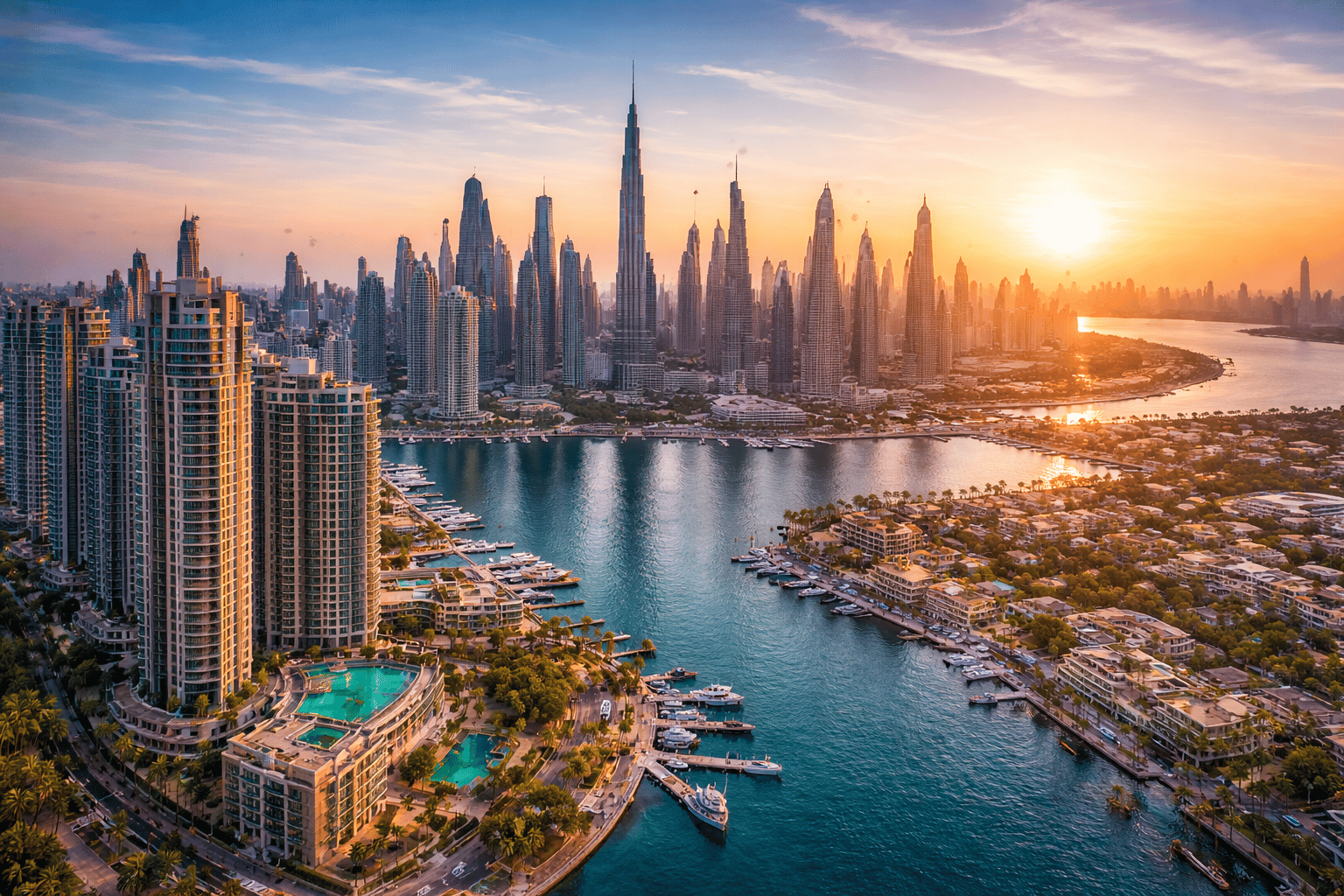
Dubai property investment in 2026 is entering its most selective phase in years. With seventy-two thousand new units entering the market and price growth stabilizing after record highs, the window for strategic entry is narrowing. Whether you are targeting rental yield, capital appreciation, or UAE residency by investment, the rules have shifted.
At Cube Realty MENA, we are seeing three clear opportunities emerge, and three common traps catching unprepared buyers.
Here is your complete roadmap for navigating Dubai real estate in 2026, from off-plan vs ready property decisions to the specific communities delivering sustainable returns.
Dubai Property Market Forecast 2026: Correction or Crash?
Let’s address the question everyone is asking:
Is the Dubai property market crashing in 2026?
The short answer is no.
But the dynamics have changed.
After 23% price growth in prime areas during 2024, 2026 is delivering a controlled correction. Knight Frank projects approximately 3% growth for prime properties and 1% for the mainstream market through year-end.
This is not a collapse. It is stabilization.
What is driving the shift?
- Supply surge: 72,000 units scheduled for delivery in 2026
- Absorption pressure: Heavy concentration in specific submarkets
- Smarter buyers: More due diligence, less emotional purchasing
- Yield normalization: Gross rental yields stabilizing between 5% and 7%
The opportunity
2026 rewards selective buyers.
Communities with limited new supply and ongoing infrastructure investment continue to outperform. Oversupplied corridors, however, offer negotiation leverage for disciplined investors.
Best Areas to Invest in Dubai 2026: Data-Driven Rankings
Based on supply pipeline, rental yield, infrastructure growth, and long-term fundamentals, here are the strongest performers.
Tier One: Established Excellence
Area 2026 Outlook Gross Yield Why It Works Dubai Hills Estate Strong 5.5–6.5% Limited remaining land, infrastructure maturity Dubai Creek Harbour Growth 5.0–6.0%Major district investment, waterfront appeal Jumeirah Village Circle (JVC)Stable6.0–7.5%High liquidity, affordable entry, rental demand
Tier Two: Selective Opportunity
Area 2026 Outlook Gross Yield Key Consideration Business Bay Mixed 5.0–6.5% Avoid over supplied towers Dubai Marina Mature 5.0–6.0% Focus on full Marina views Palm Jumeirah Premium Stable 4.0–5.5%High entry, strong resilience
Tier Three: Emerging (Higher Risk / Higher Reward)
Area 2026 Outlook Gross Yield Risk Factor Dubai South / Expo City Long-Term Play 6.0–7.0% Heavy 2026 supply Mohammed Bin Rashid City Growth 5.5–6.5% Infrastructure still evolving
Off-Plan vs Ready Property Dubai 2026: Strategic Breakdown
The decision between off-plan and ready property in 2026 depends entirely on your timeline and objectives.
When Off-Plan Makes Sense
- Targeting capital appreciation
- Leveraging developer payment plans
- Securing modern inventory
- Planning a 2–3 year hold
Key risk: Developer credibility and delivery timelines must be verified.
When Ready Property Is Stronger
- Immediate rental income
- Easier mortgage approval
- Faster residency processing
- No construction uncertainty
In 2026, distressed resale opportunities are emerging in select communities, particularly from over-leveraged 2024 purchases.
Dubai Real Estate ROI 2026: Realistic Expectations
Forget the extraordinary returns of 2024.
2026 requires disciplined forecasting.
Expected Return Components
Component 2026 Projection Capital Appreciation 1–5% Rental Yield 5–7% gross Net Yield 4.5–6% after costs
Total Return Profiles
Investor Type Target Return Strategy Conservative 6–8%Ready property, stable communities Balanced 8–12%Off-plan in growth districts Aggressive 12%+Emerging areas, renovation, 5-year hold
UAE Residency by Investment: Property Route 2026
Property investment remains the most structured and predictable route to UAE residency.
Current Requirements
- Minimum investment: AED 2 million (DLD valuation basis)
- Property type: Ready or off-plan
- Financing: Permitted
- Holding period: Minimum 3 years
Dubai Investor Visa 2026 Timeline
Phase Duration Property Selection 1–2 weeks Purchase Completion 2–4 weeks Visa Processing 2–3 weeks Activation 1 week
Total timeline: Approximately 6–10 weeks.
Dubai Property Visa Requirements Checklist
Property Documents
- Title deed or Oqood
- DLD valuation certificate
- Developer NOC (if applicable)
- Mortgage documentation (if financed)
Applicant Documents
- Passport copy
- Photograph
- Health insurance
- Current UAE visa (if applicable)
Family Sponsorship
- Attested marriage certificate
- Attested birth certificates
Critical Mistakes in 2026
- Ignoring supply concentration
- Skipping DLD valuation checks
- Trusting unverified developers
- Chasing gross yield without occupancy context
Final Perspective: Dubai Property Investment 2026
The 2026 market rewards structure over speculation.
Success requires:
- Selective geography
- Clear hold periods
- Residency planning from day one
- Realistic return expectations
The opportunity remains strong, but informed execution is no longer optional.
Ready to Execute Your 2026 Strategy?
Schedule a consultation with Cube Realty MENA for personalized area analysis, off-plan access, and investor visa structuring.
Frequently Asked Questions (FAQs)
1. How much property investment is required for UAE residency in 2026?
To qualify for long-term UAE residency through property investment in 2026, you must own property valued at a minimum of AED 2 million based on Dubai Land Department (DLD) valuation. The purchase price is not the deciding factor, the official valuation certificate is.
2. Can I buy Dubai property with a mortgage and still qualify for residency?
Yes. Buying Dubai property for residency is allowed even if the property is financed through a mortgage. There is no minimum down payment requirement, provided the property meets the AED 2 million valuation threshold.
3. Does buying off-plan property qualify for UAE residency?
Yes. Off-plan properties qualify for residency if the developer is RERA-registered and the property meets valuation requirements. Proper documentation such as Oqood registration and payment receipts must be provided.
4. How long does it take to get a Dubai property visa?
The full process typically takes between six to ten weeks. This includes property purchase completion, DLD verification, visa application submission, medical testing, and Emirates ID issuance.
5. What are the benefits of buying Dubai property for residency?
The main benefits include:
- 10-year renewable Golden Visa
- No personal income tax
- Strong rental yields (5–7% average)
- Full business ownership rights
- Family sponsorship eligibility
- Access to a stable, dollar-pegged economy
6. Can I sponsor my family if I buy property in Dubai?
Yes. Property investors can sponsor:
- Spouse
- Children
- Parents (subject to conditions)
This makes buying Dubai property for residency an ideal option for families relocating long-term.
7. Do I need to live in Dubai full-time to maintain residency?
No. Golden Visa holders are not required to reside in the UAE continuously. However, compliance with visa renewal requirements must be maintained.
8. Is Dubai property a safe investment in 2026?
Dubai remains one of the most regulated real estate markets in the region, governed by the Dubai Land Department and RERA. While 2026 is a stabilization year, strategic community selection remains key for long-term performance.
9. Are there property taxes in Dubai?
Dubai does not impose annual property tax, capital gains tax, or income tax on rental earnings. However, service charges and one-time registration fees apply.
10. Can multiple properties be combined to qualify for residency?
Yes. Multiple properties under the same owner may be combined to meet the AED 2 million threshold, subject to DLD approval and eligibility rules.
Keep reading
All posts
DAMAC Buy Property Get Luxury Car Offer UAE 2026: Full Investment Guide
The DAMAC buy property get luxury car offer in the UAE has become one of the most talked-about real estate promotions in 2026. Designed to attract both local and international investors, this campaign combines high-value property investment with exclusive lifestyle incentives. If you are planning to invest in Dubai real estate, understanding how this offer works, its benefits, and whether it’s truly worth it can help you make a smarter and more profitable decision.
Dubai Real Estate Investment 2026: Best Areas, High ROI & Smart Opportunities
Dubai real estate investment in 2026 is emerging as one of the most attractive opportunities for global investors seeking high rental yields, tax-free income, and long-term capital appreciation. With strong demand for off-plan properties, luxury developments, and investor-friendly policies like the UAE Golden Visa, Dubai continues to outperform major global markets. Whether you are exploring property investment opportunities or searching for the best areas to invest in Dubai, this guide will help you make a confident and profitable decision.
Eid ul-Fitr Dubai 2026: Your Complete Guide to Celebrating & Investing in the UAE
Eid ul-Fitr Dubai 2026 marks one of the most anticipated celebrations in the UAE, expected on Friday, March 20, 2026. As families across Dubai prepare for festive gatherings, shopping, and traditions, experienced investors recognize Eid ul-Fitr Dubai 2026 as a strategic window for real estate opportunities.